Showing posts with label Pharmacokinetics. Show all posts

Friday, 17 June 2011

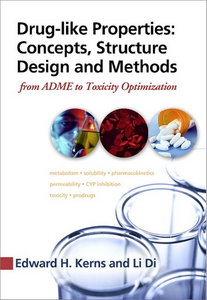
Drug-like Properties: Concepts, Structure Design and Methods

pharmacisthome.blogspot.com


Drug-like Properties: Concepts, Structure Design and Methods
Publisher:Academic Press Pages:552 2008-02-01 ISBN:0123695201 PDF 5 MB

Of the thousands of novel compounds that a drug discovery project team invents and that bind to the therapeutic target, typically only a fraction of these have sufficient ADME/Tox properties to become a drug product. Understanding ADME/Tox is critical for all drug researchers, owing to its increasing importance in advancing high quality candidates to clinical studies and the processes of drug discovery. If the properties are weak, the candidate will have a high risk of failure or be less desirable as a drug product. This book is a tool and resource for scientists engaged in, or preparing for, the selection and optimization process.

The authors describe how properties affect in vivo pharmacological activity and impact in vitro assays. Individual drug-like properties are discussed from a practical point of view, such as solubility, permeability and metabolic stability, with regard to fundamental understanding, applications of property data in drug discovery and examples of structural modifications that have achieved improved property performance. The authors also review various methods for the screening (high throughput), diagnosis (medium throughput) and in-depth (low throughput) analysis of drug properties.

* Serves as an essential working handbook aimed at scientists and students in medicinal chemistry
* Provides practical, step-by-step guidance on property fundamentals, effects, structure-property relationships, and structure modification strategies
* Discusses improvements in pharmacokinetics from a practical chemist's standpoint

Sunday, 12 June 2011

Dosage Claculations an Incredibly Easy


Dosage Calculations: An Incredibly Easy! Pocket Guide provides time-starved nurses with critical information on calculating dosages accurately, in a streamlined, bulleted, quick-reference format. The book is pocket-sized for easy reference anytime, anywhere, and uses illustrations, logos, and other Incredibly Easy! features to help nurses grasp key points quickly. Chapters cover math basics; measurement systems; drug administration; oral, topical, and rectal drugs; parenteral drugs; I.V. infusions; and calculations for pediatric, obstetric, and critical care patients. Logos include Dodging Drug Dangers—advice on avoiding drug errors; Help Desk—best practices tips; Calculation Clues—aids for overcoming math phobias; and Memory Jogger—helpful mnemonics.

Tuesday, 31 May 2011

Applied Clinical Pharmacokinetics

Applied Clinical Pharmacokinetics (US$59)
Stationary Office Pages: 800 2008-06-24 ISBN: 0071476288 3 MB Rapidshare and Megaupload

Applied Clinical Pharmacokinetics
By Larry A. Bauer

* Publisher: McGraw-Hill Medical
* Number Of Pages: 800
* Publication Date: 2008-06-24
* ISBN-10 / ASIN: 0071476288
* ISBN-13 / EAN: 9780071476287
* Binding: Hardcover

Product Description:

The easiest and most trusted way to learn the clinical application of pharmacokinetics

The most current, hands-on book in the field, Applied Clinical Pharmacokinetics gives you clear and useful coverage of drug dosing and drug monitoring that no other text can match. It offers the latest standardized techniques and approaches to patient-specific dosing plus new information on more recently monitored drugs.

Written by a nationally recognized authority in pharmacokinetics, Applied Clinical Pharmacokinetics is full of essential topics for pharmaceutics, pharmacokinetics, therapeutics, and clinical pharmacy courses. Alternatively, it can be used as a clinical refresher to brush up on key concepts and procedures.

FEATURES

* NEW! High-yield sections on dosing strategies in all chapters
* NEW! Up-to-date, ready-to-use information on monitored drugs
* Valuable coverage of drug dosing in special populations, including patients with renal and hepatic disease, obesity, and congestive heart failure and patients on dialysis
* All the information that practitioners need regarding drug categories such as antibiotics, cardiovascular agents, anticonvulsants, and immunosuppressants
* Tools to simplify learning throughout, such as an introductory chapter on clinical pharmacokinetic and pharmacodynamic concepts, examples of calculations, and problems with answers and explanations at the end of each chapter

Concepts In Clinical Pharmacokinetics


Concepts In Clinical Pharmacokinetics
Publisher:American Society of Health-System Pharm Pages:230 2005-10-30 ISBN:1585281247 CHM 2.1 MB
Programmed manual presents basic pharmacokinetic concepts and procedures. Material relates to individualization of drug dose regimens. Topics include pharmacokinetics, half-life, elimination rate, AUC, two-compartment models, drug elimination process, vancomycin, and more. For pharmacists and practitioners. Softcover. DNLM: Pharmacokinetics-Programmed Instruction.


Computational Pharmacokinetics

Computational Pharmacokinetics (Chapman & Hall/Crc Biostatistics Series)
By Anders Kallen

Publisher: Chapman & Hall/CRC
Number Of Pages: 184
Publication Date: 2007-07-19
ISBN-10 / ASIN: 1420060651
ISBN-13 / EAN: 9781420060652
Binding: Hardcover

Being that pharmacokinetics (PK) is the study of how the body handles various substances, it is not surprising that PK plays an important role in the early development of new drugs. However, the clinical research community widely believes that mathematics in some way blurs the true meaning of PK. Demonstrating that quite the opposite is true, Computational Pharmacokinetics outlines the fundamental concepts and models of PK from a mathematical perspective based on clinically relevant parameters. After an introductory chapter, the book presents a noncompartmental approach to PK and discusses the numerical analysis of PK data, including a de@@@@@@ion of an absorption process through numerical deconvolution. The author then builds a simple physiological model to better understand PK volumes and compares this model to other methods. The book also introduces compartmental models, discusses their limitations, and creates a general-purpose type of model. The final chapter looks at the relationship between drug concentration and effect, known as PK/pharmacodynamics (PD) modeling. With both a solid discussion of theory and the use of practical examples, this book will enable readers to thoroughly grasp the computational factors of PK modeling.
http://rapidshare.com/files/11 5139678/compha.rar
orhttp://rapidshare.com/files/11 529737...cokinetics.rar
orhttp://www.filefactory.com/fil e/3875ba/